How it changed
Eight moments behind the ruins
Residents, wars, disasters, excavators and conservators have all altered the city. Each left traces you can still read on site.
012nd century BC
Elite houses grow to palace scale
The House of the Faun, about 3,000 m², filled an entire city block. It had two atria and two peristyle gardens. The Alexander Mosaic that paved one of its rooms shows the kind of Greek-inspired luxury Pompeii’s elite wanted to display.
What remainsThe layout survives on site. The original Alexander Mosaic and the bronze faun are in the National Archaeological Museum of Naples (MANN).
02c. 70 BC
The Amphitheatre is built
Two leading colonists, Gaius Quinctius Valgus and Marcus Porcius, paid for the Amphitheatre. It is the oldest surviving stone amphitheatre in the Roman world and held roughly 20,000 spectators.
Important distinctionThe Amphitheatre staged gladiator fights and hunts. The Large Theatre and Odeion were for drama, music and recitals.
03AD 59
A riot in the Amphitheatre
At a gladiatorial show, a fight between Pompeians and visitors from nearby Nuceria turned deadly. The historian Tacitus records that the Roman Senate banned such games at Pompeii for ten years, dissolved illegal associations and exiled the show’s organiser.
Where to see itA fresco of the brawl, found in a Pompeian house, is now in MANN in Naples.
04AD 62
An earthquake starts 17 years of repairs
The philosopher Seneca dates a severe earthquake to 5 February AD 62 (Tacitus places it in AD 63). Temples, houses and the water system were damaged. Many repairs were still unfinished in AD 79.
Visitor takeawayA relief in the House of Caecilius Iucundus appears to show the Temple of Jupiter shaking in this quake.
05AD 79
Vesuvius buries the city
Pumice and ash fell for hours, then deadly pyroclastic currents swept through the streets. The traditional date is 24 August. A charcoal inscription found in 2018, dated to mid-October, has persuaded many scholars that the eruption happened in autumn, probably 24 October.
What remainsSeveral metres of volcanic deposits preserved the city’s plan, walls and many interiors, but not every object or roof.
061748
Systematic excavation begins
Engineers under Charles of Bourbon, then King of Naples, started digging here after the success at Herculaneum. At first they were looking for treasure more than understanding. An inscription found in 1763 confirmed that the site really was Pompeii.
Look beyond the wallsMany mosaics, frescoes and sculptures were cut out and taken to Naples, so some rooms now show only their setting.
071863
Fiorelli brings method and casts
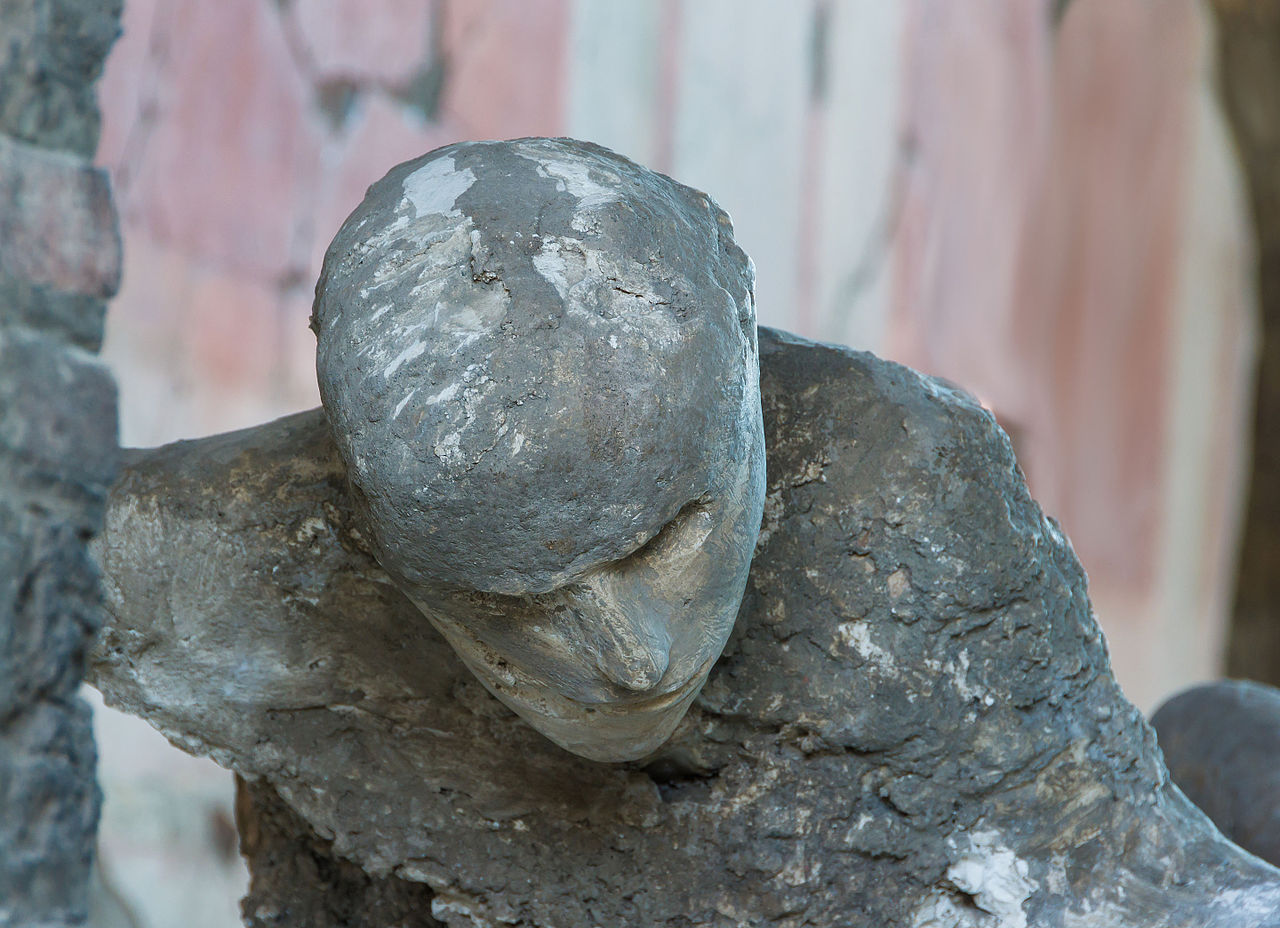
Giuseppe Fiorelli introduced stratigraphic excavation and the region–block–door numbering system still used today (for example, VI.12.2 for the House of the Faun). He also pioneered pouring plaster into the hollows left by victims’ bodies.
What to noticeThe painted numbers on doorways come from his system and help you navigate with a map.
081997–today
Conservation becomes the story
Pompeii became part of the UNESCO property “Archaeological Areas of Pompei, Herculaneum and Torre Annunziata” in 1997. The House of the Gladiators collapsed in 2010. That led to the Great Pompeii Project, launched in 2012 with EU and Italian funding, which stabilised and reopened many buildings.
What to noticeClosures, protective roofs and set routes exist to preserve a fragile, open-air city.